

Propel Operational Performance by Doing More With Your Data
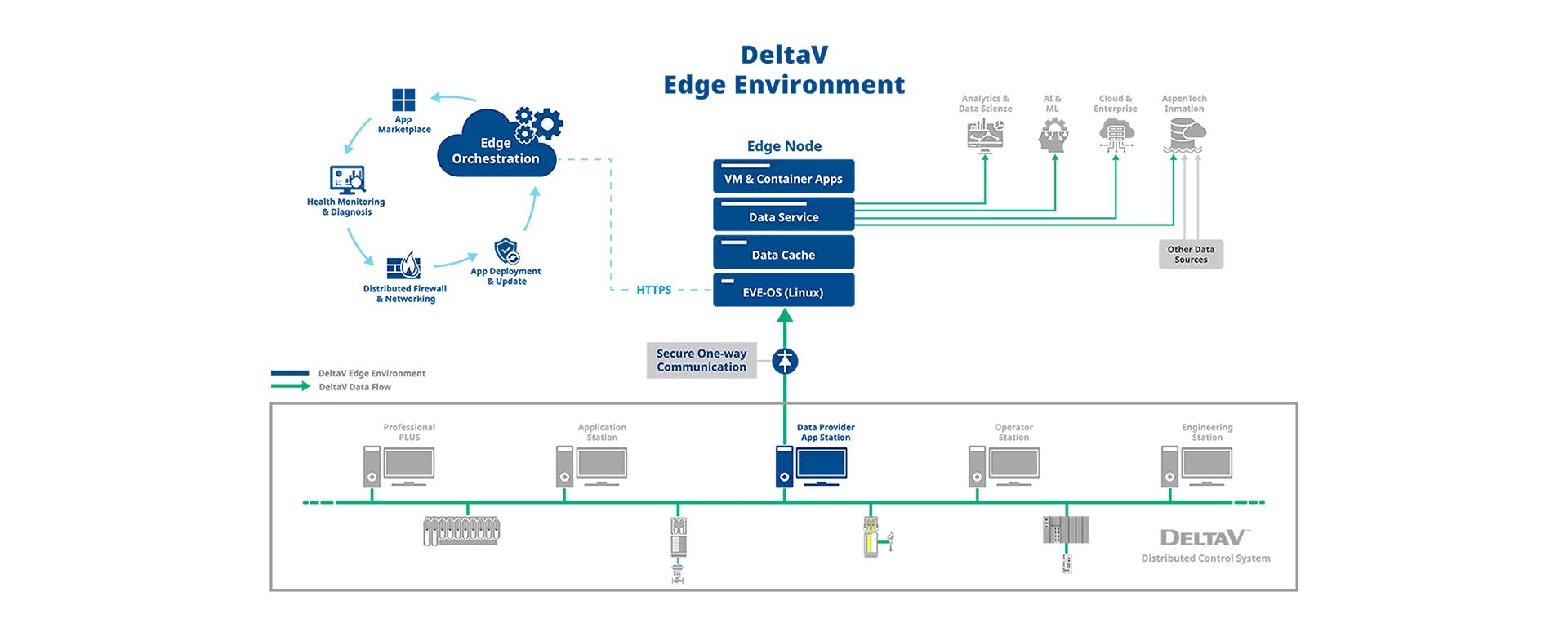
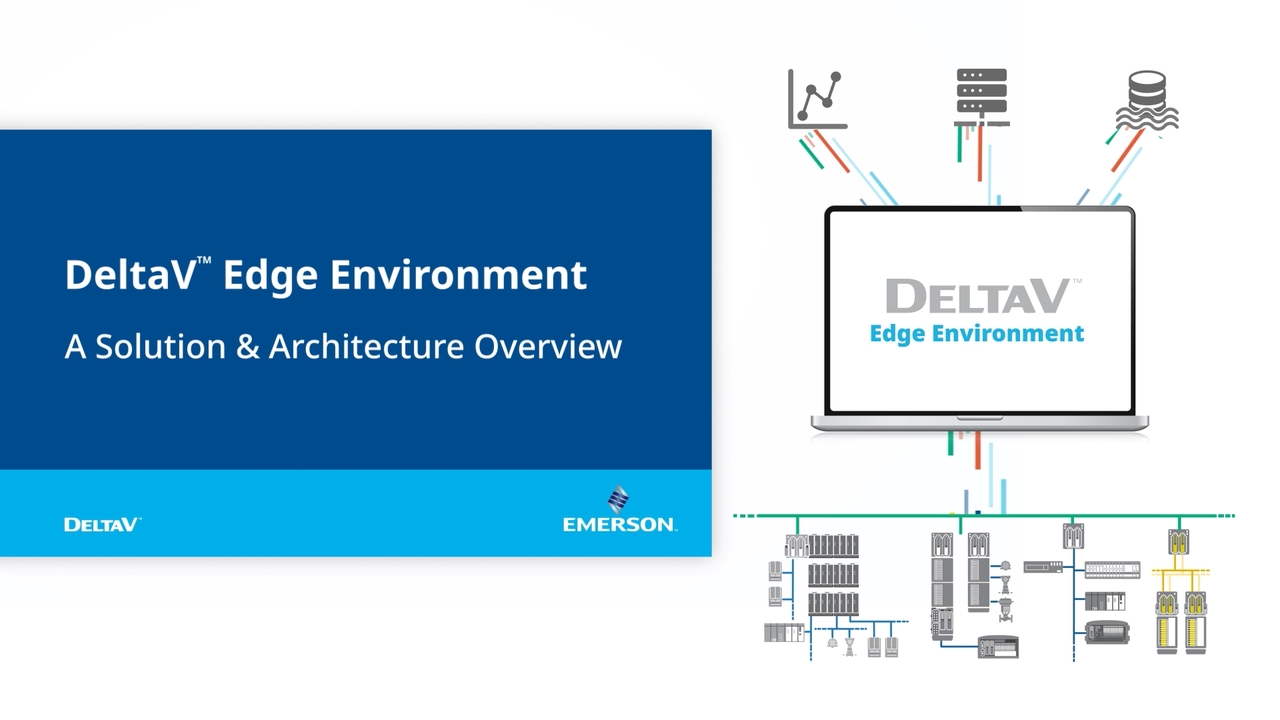
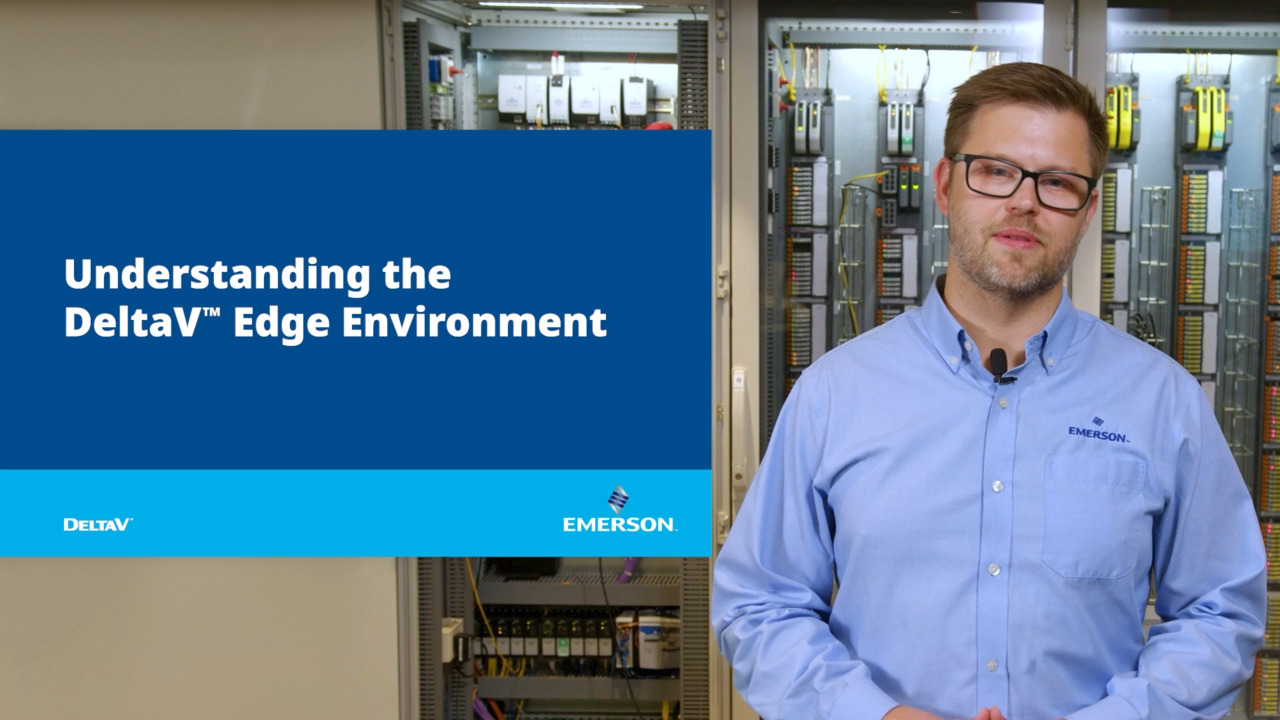
The DeltaV Edge Environment enables IT teams to securely access all DeltaV data and prepare it for enterprise-wide use. More than a typical edge gateway, DeltaV Edge seamlessly handles large volumes of DeltaV data and delivers contextualized insights to drive smarter, faster operational decisions.
Easy, Secure Data Communication
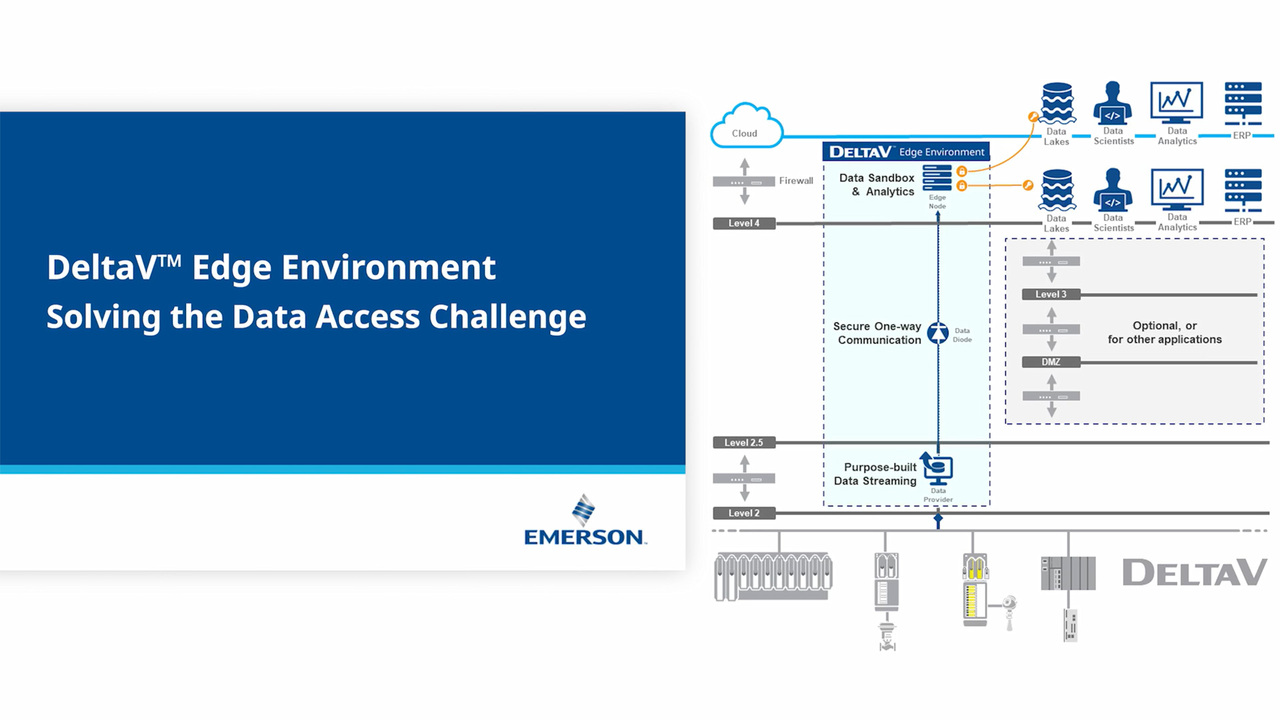
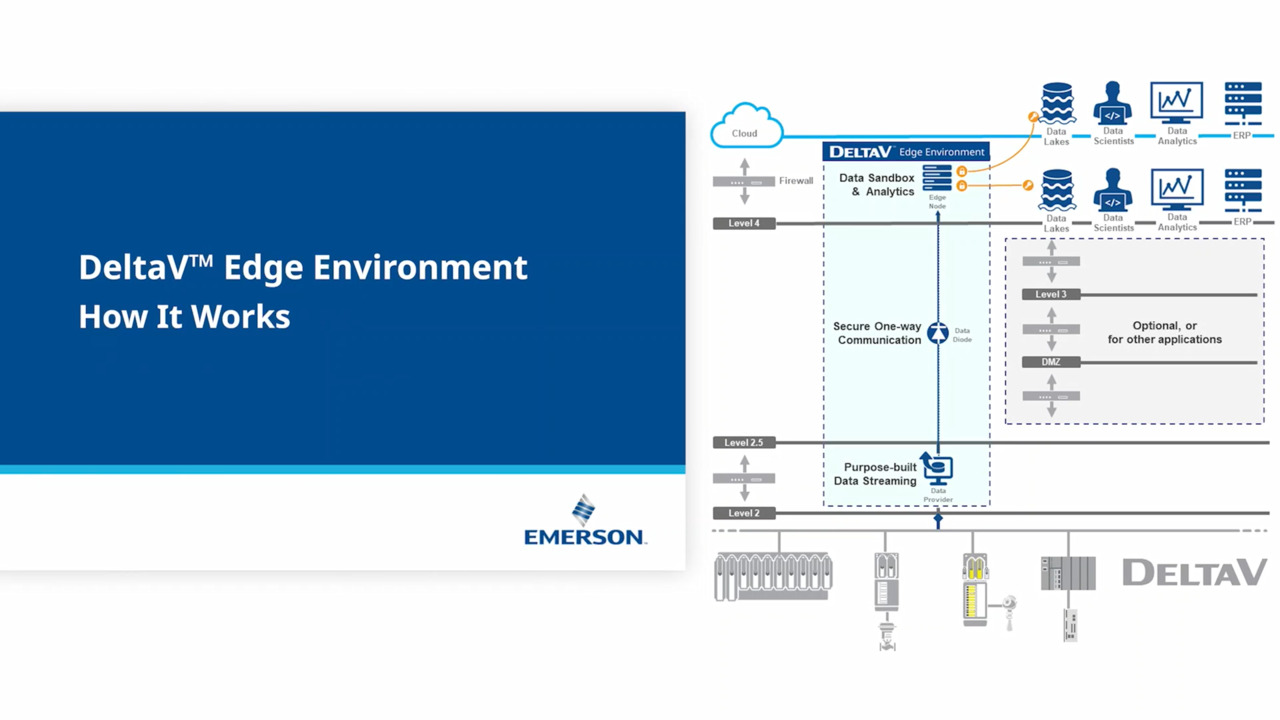
A simplified connection architecture delivers reduced network complexity utilizing a single outbound flow that is encrypted and one-way to ensure security.
Contextualized Data for Increased Usability
Data is housed in repositories together with DeltaV’s configuration hierarchy, providing context and correlations to relevant relationships.
Data That is Ready for Use
Data is available on the enterprise-level network, ready for access through widely used interfaces such as OPC UA and REST API.
A Data Sandbox for Execution and Experimentation
Data is reflected exactly in the same format as it is inside of DeltaV and is automatically synchronized, allowing for experimenting and testing without disruption to operations.

Low-touch Maintenance
Software deployment, troubleshooting, updates and upgrades are executed remotely by Emerson, or users can choose to manage these functions themselves.
See What’s Possible with DeltaV Edge Environment
DeltaV Edge Environment provides new ways to access, analyze, and act on your operational data. Download the flyer to explore real-world examples of how you can improve plant visibility, accelerate analysis, and extend the value of DeltaV across the enterprise.
Access to Process Control System Data When and Where You Need It
The DeltaV Edge Environment makes data democratization a reality. Accessibility of data is maximized through secure egress from The DeltaV Distributed Control System to data lakes, data scientists, analytics applications or enterprise resource planning systems.
DeltaV Edge Apps
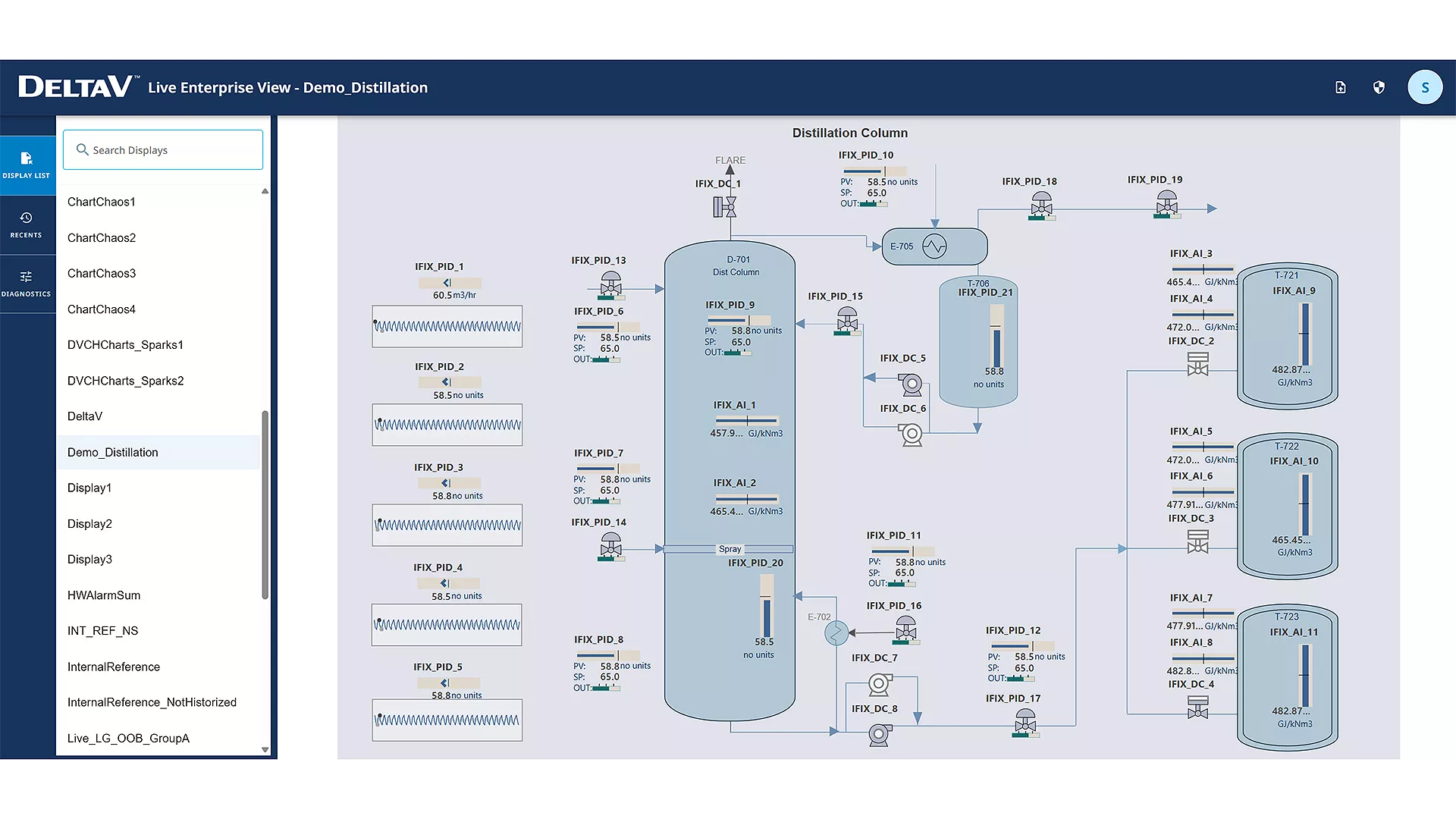
Extend Real-Time Operational Awareness Beyond the Control Room
DeltaV Live Enterprise View extends DeltaV Live displays beyond the operator station by making them available through a standard web browser with secure, read-only access. Graphics, datalinks, watch areas, and animations are presented exactly as configured in DeltaV Live, with no display conversion, duplication, or additional engineering required.
DeltaV Edge Alliance Program
Partner with leading technology providers within Emerson's ecosystem to unleash the true value of data. The DeltaV Edge Environment empowers teams across your organization to leverage data for deeper insights, improved operational performance, and streamlined IT infrastructure. Solutions from DeltaV Edge Alliance Members are certified for quality, reliability, and security, ensuring you can trust in their effectiveness and safety.






Frequently Asked Questions
DeltaV Edge Environment is an on-premise platform designed specifically for DeltaV systems that delivers secure, read-only access to your DeltaV data. It sits between the control network and higher-level applications, giving teams across the plant and enterprise a way to use operational data without touching the control system.
Traditional interfaces deliver values as flat tags, so teams spend time rebuilding structure before the data is usable. DeltaV Edge delivers data in the DeltaV hierarchy with metadata preserved, so information arrives already in context. It also serves recent runtime data at high density without requiring long-term historian storage.
Access to DeltaV data through DeltaV Edge Environment is read-only, so no application connected to it can send commands or make changes. The Edge Node replicates data and serves it separately from the DeltaV system, preserving system isolation. Where enterprise integration requires it, a data diode enforces one-way communication.
Through standard interfaces including REST API, OPC UA, MQTT, and NATS, so IT platforms and modern applications can consume DeltaV data without custom connectivity work.
Dashboards, reports, analytics, and workflows using tools you already know, including Power BI, Grafana, Excel, Node-RED, Jupyter, and custom applications. Common starting points are control loop performance dashboards, alarm monitoring views, shift handover reports, and batch review workflows.
Runtime process values, configuration context, alarms and events, and batch events, all delivered with the hierarchy and relationships intact so you can work with the data the same way you think about the process.
- DeltaV Edge Explorer for browsing, trending, and investigating alarms and events.
- DeltaV Agent.Connect for asking questions in plain language about your process data and Emerson's DeltaV product knowledge.
- DeltaV Live Enterprise View for extending DeltaV Live displays beyond the operator station.
In addition, you can also build your own.
No. DeltaV Edge Explorer gives engineers, analysts, and data consumers a ready-to-use way to find and use DeltaV data without operator access or specialist knowledge. DeltaV Agent.Connect goes further, letting you ask questions in plain language.
Yes. The Edge Node includes a container and VM engine and an integrated Application Marketplace with supported open-source and Emerson-provided apps. You and partners can also deploy your own, keeping data processing close to the source.
Most industrial AI efforts stall on getting trustworthy plant context to a model safely. DeltaV Agent.Connect, an application on DeltaV Edge, provides a governed path from DeltaV data to Large Language Models (LLM), with an open choice of model and your process data staying in your own environment.
It acts as the DeltaV-facing layer, delivering data with hierarchy and metadata preserved to data fabrics like AspenTech Inmation, enterprise data lakes, or cloud platforms. The result is a repeatable integration pattern across plants rather than point-to-point connections that multiply over time.
Edge Orchestration provides centralized deployment and lifecycle management across Edge nodes, so applications and updates roll out consistently rather than being maintained site by site.