
What is the DeltaV™ | Life Sciences Automation Platform?
For more than 25 years, Emerson has been a trusted automation partner for the world's most demanding regulated industries. Building on its deep expertise in process control and manufacturing execution, DeltaV™ for Life Sciences delivers an integrated portfolio of biopharmaceutical manufacturing technologies designed to unify operations within a connected ecosystem that enhances operational efficiency, data visibility, and decision-making across the production lifecycle.

Scope
Process development through commercial manufacturing, batch and continuous.
Platform
DeltaV PKM, RTS, MES, DCS, Edge, Spectral PAT, AspenTech Inmation, and AMS Machine Works.
Compliance
GAMP 5-aligned documentation; developed in support of 21 CFR Part 11 and EU Annex 11 environments.
Interoperability
Integrates across Emerson's automation portfolio, third-party control and software systems, and enterprise solutions such as ERP and LIMS.
Support
Product support, lifecycle services, training, and modernization programs, backed by Guardian software and solutions.
DCS
Distributed Control System
MES
Manufacturing Execution System
RTS
Real-Time Scheduling
PKM
Process Knowledge Management
PAT
Process Analytical Technology
Real Outcomes. Measurable Impact.
Start Where You Need. Scale When You're Ready.
Choose the capabilities that fit your needs today and expand as your requirements evolve. Each solution is designed to integrate across Emerson's portfolio and with the third-party systems you already run, so your investment scales as you grow.







Standardize Recipes. Accelerate Tech Transfer.
We're investing in recipe standardization — capturing process specifications in a structured, reusable format that carries cleanly between sites and feeds AI-ready recipes, workflow, scheduling, and analytics. These capabilities build on the validated environment you already run.
Critical Business Drivers
The pressures every life sciences manufacturer is managing, and where the platform addresses each.




Proven Results
Hear directly from life sciences leaders about how DeltaV™ solutions are helping improve operational performance, accelerate manufacturing, and drive measurable business results.
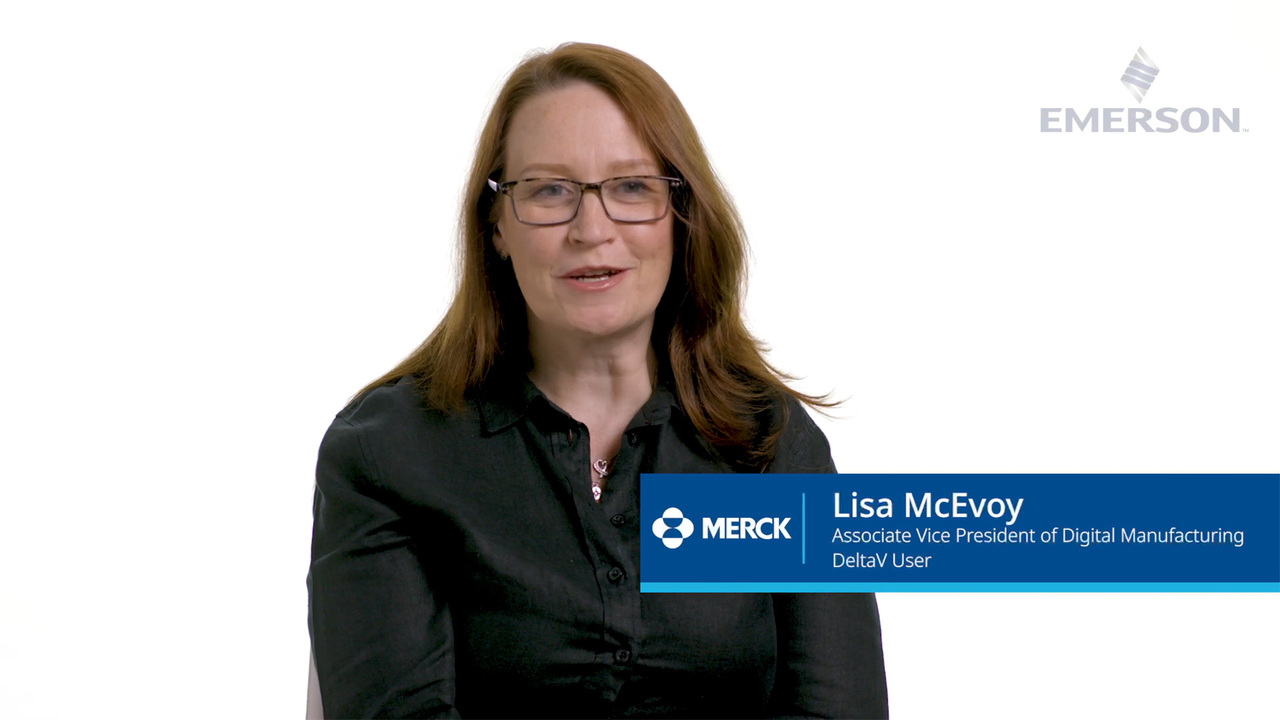
Merck Enhances Batch Production with Real-Time Insights
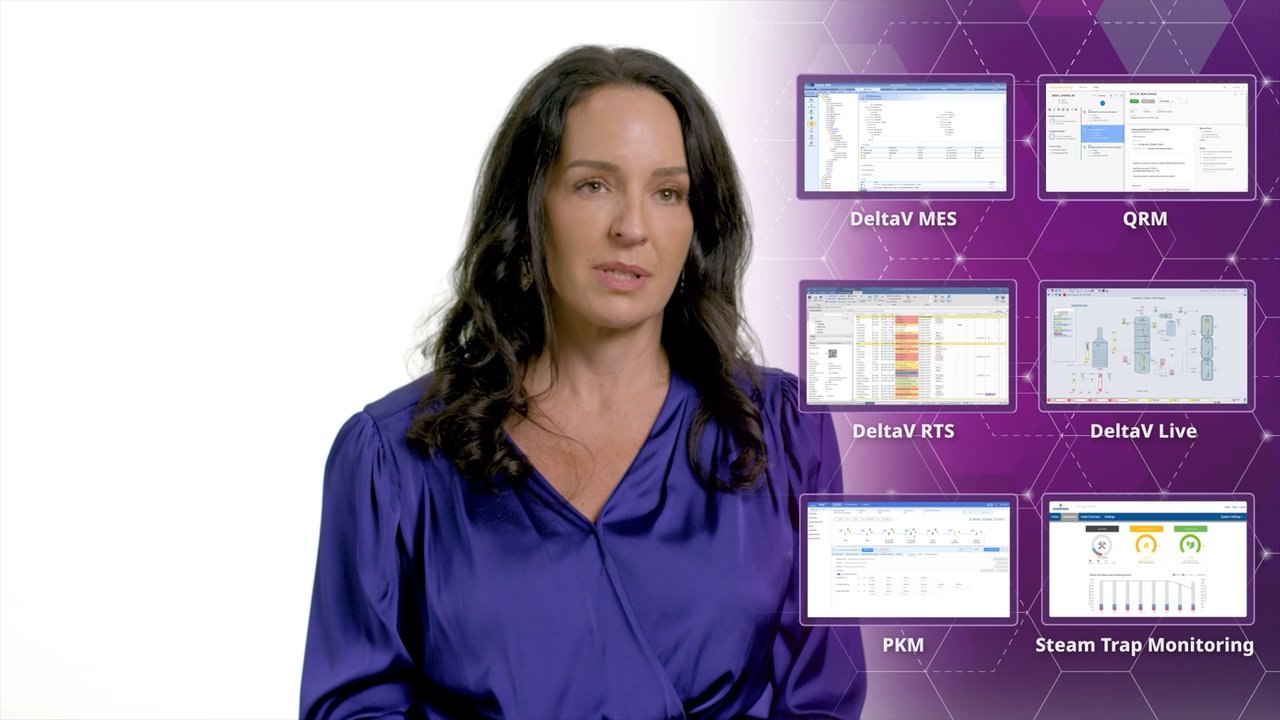
See how Merck uses DeltaV | Life Sciences — including DCS, RTS, and PKM, for batch consistency, real-time data insight, and standardization across global operations.
Merck Enhances Batch Production with Real-Time Insights
Roche Accelerates Tech Transfer with Digital Process Knowledge
Dig Deeper
Everything you need to evaluate DeltaV™: customer proof, product specifications, live demos, and opportunities to connect with our team.

Accelerate Therapies from Lab to Patient

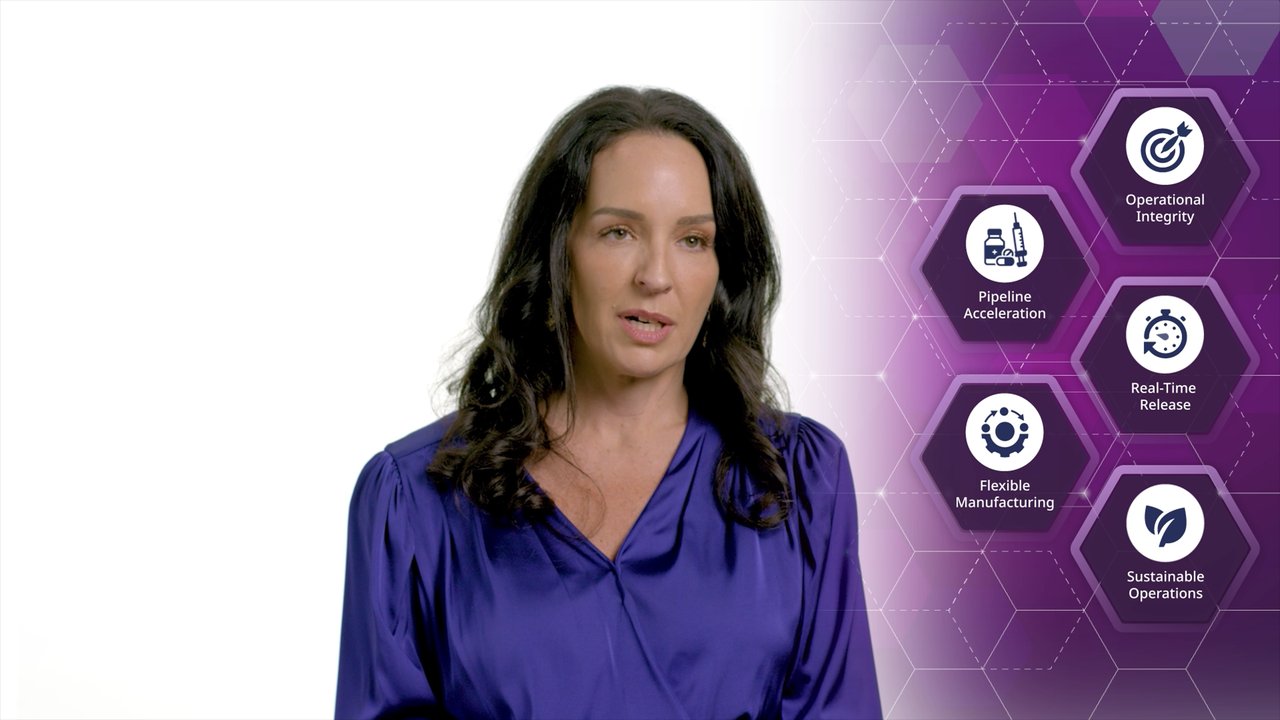
The DeltaV | Life Sciences Platform is Emerson's portfolio of automation and software solutions purpose-built for the life sciences industry — connecting the full journey from process development through commercial manufacturing. The core suite includes DeltaV PKM (process knowledge management for process/parameter definitions for tech transfer), DeltaV MES (from simple to complex workflow management, electronic batch records, and quality review), DeltaV RTS (for real-time shop-floor integrated scheduling, bottleneck identification/elimination, and capacity planning), and DeltaV DCS (distributed control system, automation, and batch execution) including DeltaV Spectral PAT (inline quality measurement and closed-loop control). Supporting the suite are AspenTech Inmation (data fabric and contextualization), DeltaV Edge, and Equipment Diagnostics. Each solution can be adopted independently and expanded over time as your needs evolve.
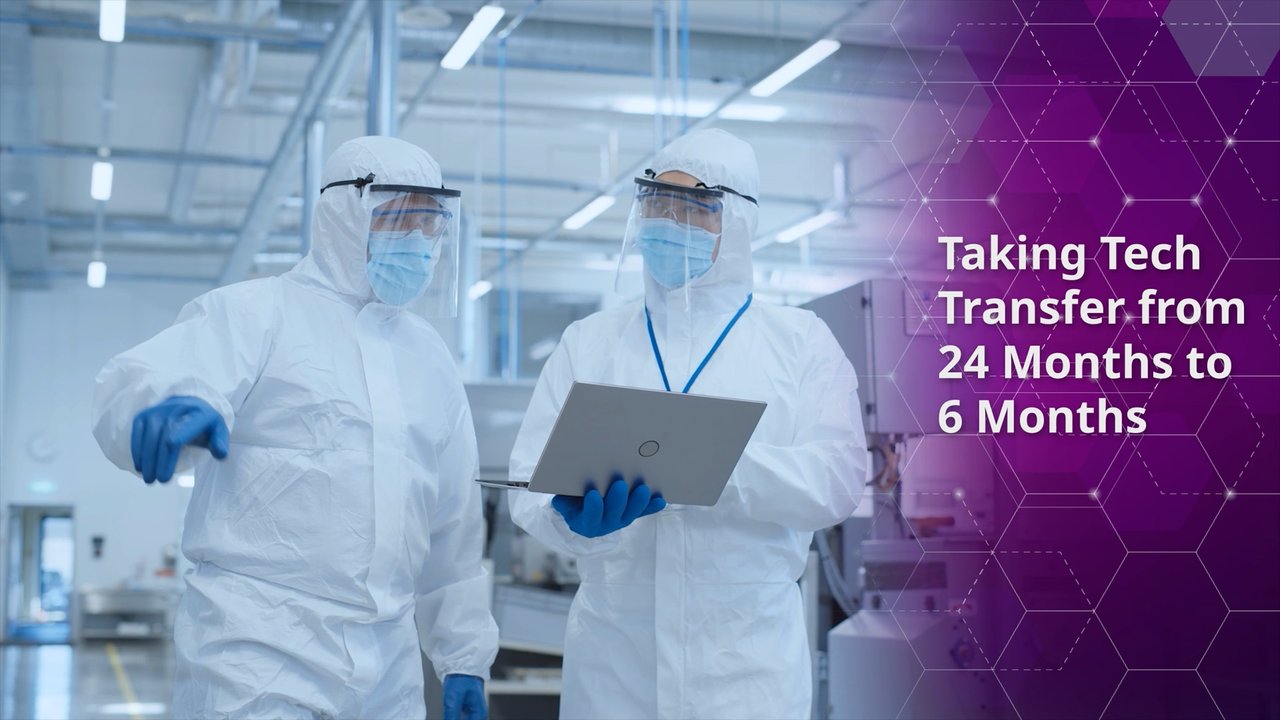
Getting a new therapy from discovery to commercial manufacturing with traditional approaches is a long, cumbersome, and costly journey. The platform shortens that journey by digitizing the recipe lifecycle and connecting key components across every stage and site. DeltaV PKM serves as a single source of truth for process specifications, master data, and global recipe management — eliminating manual re-entry and the errors that come with it. At one site running ten tech transfers a year, recipe authoring effort dropped by roughly seven FTEs, with approval to MES effectivity in under five minutes. The result: tech transfers achievable in weeks, not months.
Running multiple products across the same facility demands a system that separates product definition from manufacturing execution. DeltaV PKM maintains a standardized library of reusable recipe building blocks so that introducing a new product means changing parameters, not rebuilding validated systems. DeltaV MES enforces workflow, manages materials and equipment, and tracks genealogy across every changeover. DeltaV RTS keeps the schedule adaptive — optimizing run sequences so changeovers are planned, not reactive. OEM integration enables new modular equipment to be incorporated with less engineering and validation effort.
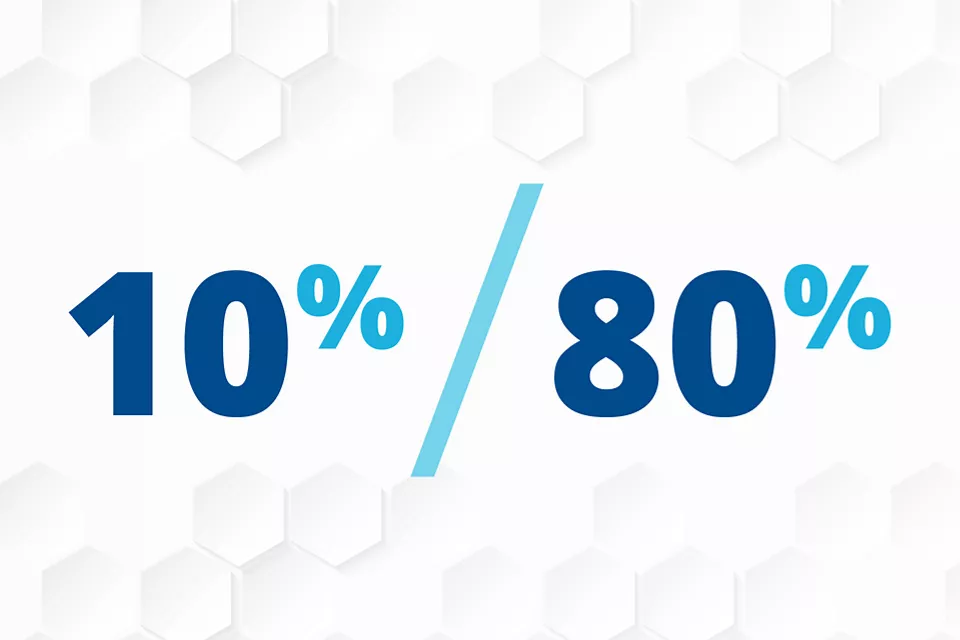
Consistently meeting your production schedule requires functioning equipment, prepared operators, and responsive schedules based on live plant conditions. Equipment Diagnostics capabilities enable identification of equipment issues early — before they become unplanned downtime. Paired with DeltaV RTS, maintenance alerts can be evaluated to determine the best time to schedule maintenance. Customers have seen up to 10% more production capacity and up to 80% less equipment downtime. DeltaV MES enforces procedural consistency, captures batch record data, and surfaces exceptions immediately. DeltaV DCS automates the actual process with precision control.
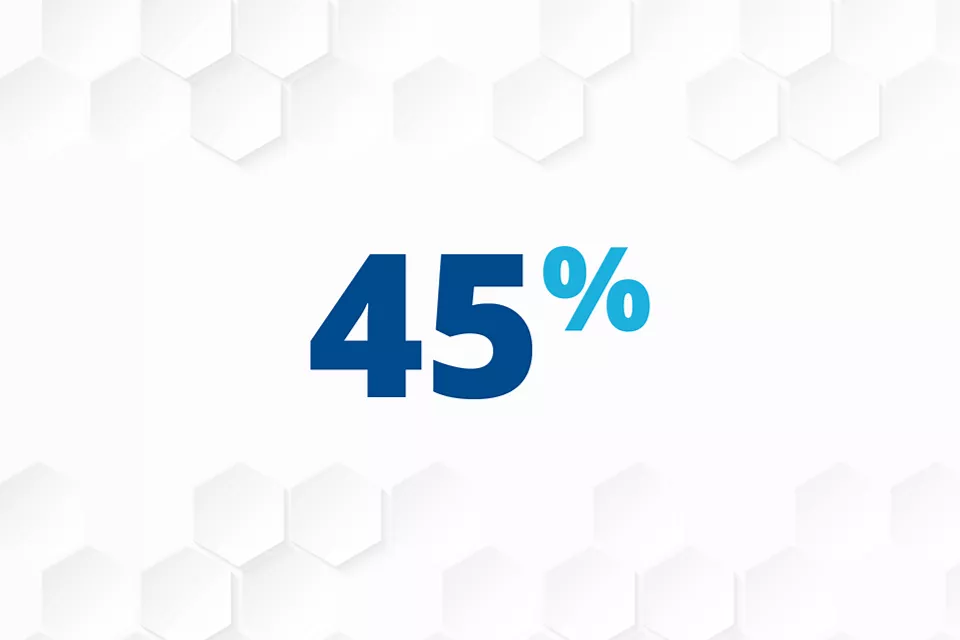
DeltaV MES with review by exception means 40 to 45 percent of batches auto-close with zero review required. When review is needed, batch record review times drop to six hours or less — more than 50 percent faster — with same-day completion. DeltaV Spectral PAT replaces offline sampling with inline analysis of critical process parameters, closed-loop with DeltaV DCS to actively control the process in real time. DeltaV RTS enables real-time scheduling of both production and the lab to ensure both teams are working from the same up-to-date schedule.
Sustainability means reducing energy and water usage, eliminating waste, and retiring paper-based processes — while maintaining the compliance your regulators require. DeltaV MES eliminates paper batch records and paper-based workflows. DeltaV DCS with advanced process control optimizes energy and utility consumption during batch execution. Equipment Diagnostics and predictive maintenance capabilities reduce waste associated with unnecessary or reactive maintenance. AspenTech Inmation brings sustainability KPIs together in one place — giving operations and leadership the visibility to track, report, and achieve sustainability targets across the entire operation.
Emerson's solutions are AI-ready: AspenTech Inmation and DeltaV Edge contextualize and stream data to your analytics and AI environments, and DeltaV RTS applies AI-ready scheduling that adapts to live plant conditions. AI is applied where it is supported by specific product capabilities, with automation and human oversight. Other AI tools are available as part of the platform, such as those for streamlined recipe development and answering configuration questions.
Each solution addresses a distinct layer of manufacturing operations — and they are designed to connect. PKM manages process definitions, recipes, and knowledge from development through clinical to commercial scale. When a recipe is ready for manufacturing, parameters and processes move directly into MES or DCS — eliminating manual re-entry. DCS executes the batch with strict process control. MES orchestrates workflow, materials, equipment, and captures the electronic batch record. RTS aligns the production schedule to live plant conditions. AspenTech Inmation connects data across the portfolio, reducing the need for custom integrations.
Yes. DeltaV MES and PKM are designed to integrate with the systems you already run, including third-party control systems. You do not need to replace your existing automation infrastructure to benefit from Emerson's manufacturing execution or process knowledge management capabilities. AspenTech Inmation connects, contextualizes, and streams data from a wide range of OT and IT sources regardless of vendor. If your existing DCS is nearing end of lifecycle, modernization tools can accelerate migration to DeltaV DCS while minimizing time, effort, and testing required.
Start with the capability that addresses your most pressing challenge. Many customers begin with DeltaV MES to digitize batch records and accelerate review and release. Others start with DeltaV PKM to solve tech transfer and recipe management across sites. DeltaV RTS is often the entry point for customers whose primary pain is scheduling and capacity. Each solution is designed to deliver standalone value and connect into the broader portfolio as your requirements grow. Emerson's life sciences team works with you to assess your current state, identify the highest-value starting point, and build a roadmap that scales with your operation.
Emerson's solutions are developed with GMP requirements in mind to support customer validation efforts, with GAMP 5-aligned documentation. Capabilities such as secure authentication, electronic signatures, audit trails, and electronic records are developed in support of 21 CFR Part 11 and EU Annex 11 regulated environments. Regulated records may originate across multiple systems; DeltaV solutions are designed to support the ALCOA+ principles of data integrity: data that is attributable, legible, contemporaneous, original, and accurate.
DeltaV supports contemporaneous electronic records, secure user access, electronic signatures, and audit trails across connected systems. Rather than assuming every record originates in one place, the ecosystem is designed to help maintain consistent data-integrity controls where records are created, supporting GMP manufacturing and customer validation.
Emerson's life sciences software is developed in accordance with GAMP 5 guidelines, providing the documentation and risk-based framework that regulated manufacturers require. Emerson provides IQ and OQ support, along with documentation packages needed to support your validation activities. Because the platform is a commercial off-the-shelf product with a consistent architecture, validation effort is significantly reduced compared to custom-built systems.
DeltaV PKM serves as the enterprise-level system of record for process definitions, master data, and global recipe management — accessible across all sites in your network. Standardized recipe building blocks and process terminology ensure consistency between development, clinical, and commercial manufacturing sites, regardless of geography. DeltaV RTS supports multi-site scheduling and capacity planning. AspenTech Inmation aggregates and contextualizes manufacturing data across sites — giving enterprise teams visibility into performance, quality, and compliance across the entire network.
DeltaV PKM integrates across the systems needed for managing products, such as LIMS and ERP. DeltaV MES operates as the manufacturing layer between your ERP system and the shop floor — receiving production orders from ERP and returning batch completion, materials consumption, and quality data back up the stack. Standard integration interfaces support connection with SAP and other leading ERP platforms. AspenTech Inmation can further consolidate and contextualize data across ERP, MES, DCS, LIMS, and other systems.
Implementation timelines vary depending on scope of deployment, site complexity, and the maturity of your existing processes and data. DeltaV MES is designed to reduce implementation time compared to traditional MES deployments — the Recipe Importer Tool automates batch record creation for workflow execution, reducing timelines from months to days for existing recipe libraries. Emerson's professional services team supports phased rollouts that deliver value at each stage. Timelines should be validated with Emerson for your specific program.
Yes. The DeltaV Life Sciences Platform is designed to work within your existing IT and OT ecosystem. Standard interfaces support integration with LIMS, QMS, and other enterprise applications. AspenTech Inmation provides a real-time data integration layer that connects, contextualizes, and streams data from a wide range of systems — enabling the data flows between manufacturing execution, quality, and laboratory functions essential for batch release and compliance.
DeltaV RTS is a real-time scheduling and discrete event simulation solution purpose-built for biopharmaceutical manufacturing. Unlike ERP-based scheduling, which operates on planned data and updates periodically, RTS connects directly to live plant conditions — equipment status, batch progress, maintenance alerts — and adjusts the schedule in real time. It models the full complexity of biopharmaceutical operations including shared resources, cleaning and changeover requirements, buffer and media preparation, and utility constraints. Customers have seen up to 10% more production capacity and up to 80% less equipment downtime.
DeltaV Spectral PAT brings spectral waveform data — from near-infrared, Raman, or other spectral analyzers — directly into the DeltaV control system, enabling inline measurement of critical process parameters and quality attributes. Parameters include glucose, galactose, lactate, moisture, coating thickness, protein concentration, and more depending on the process and analyzer configuration. Chemometric models translate spectral data into real-time parameter values, which can be used to close the loop and actively control the process.
During batch execution, DeltaV MES monitors every step, parameter entry, and operator action against predefined acceptance criteria. When everything is within specification, no reviewer action is required — those records are automatically closed. Only true exceptions — out-of-specification values, missed steps, manual overrides — are flagged and routed to the appropriate reviewer with full context. The result is that 40 to 45 percent of batches auto-close with zero review required. When review is needed, it is focused on what actually matters — reducing batch record review times by more than 50 percent and enabling same-day completion.
MES manages manufacturing execution — the workflow, materials, equipment, and records for a specific batch at a specific site. PKM manages process knowledge — the underlying process definitions, specifications, risk assessments, and recipe structures that govern how a product should be made, across its entire lifecycle and across all sites. PKM is where process development teams work, where tech transfer happens, and where global recipe standardization is maintained. PKM feeds MES, and the data generated in MES can inform ongoing process knowledge and continuous improvement in PKM.
Emerson has been a trusted automation partner for the life sciences industry for more than 25 years — evolving from deep roots in process control and batch automation into a broader portfolio that now spans manufacturing execution, real-time scheduling, process knowledge management, and data infrastructure. The DeltaV Life Sciences suite is built on decades of learning from some of the world's most demanding regulated manufacturing environments, including large-molecule biologics, small-molecule pharmaceuticals, vaccines, and advanced therapy medicinal products.
Yes. From sterile biologics to high-volume devices, Emerson helps streamline development and scale manufacturing across a diverse range of life sciences segments. The platform supports upstream and downstream biopharmaceutical manufacturing, small-molecule API and drug product, vaccines, and advanced therapy medicinal products including cell and gene therapy. Each segment has distinct process requirements and regulatory expectations — and Emerson's team includes domain specialists with hands-on experience across all of them.
Emerson works with life sciences manufacturers at every stage of maturity — from early-stage biotechs standing up their first MES to global pharmaceutical companies standardizing operations across a multi-site network. A typical engagement begins with an assessment of your current processes, systems, and gaps, followed by a solution design and roadmap that prioritizes the highest-value opportunities. Emerson's professional services team supports implementation, validation, and startup. Beyond go-live, Emerson provides ongoing technical support, software maintenance, and access to training and best practices.